
Music is an offspring of pure science (physics) expressed as art. Music is made up of sound, frequency, pitch, resonance, vibration, echo, Doppler effect; these topics are pure science with mathematical derived formulas and not just art. For example, the action of a typical upright piano obeys Newtons third law.
Newton’s third law simply states that for every action there is an equal and opposite reaction. So, if object A acts a force upon object B, then object B will exert an opposite yet equal force upon object A.
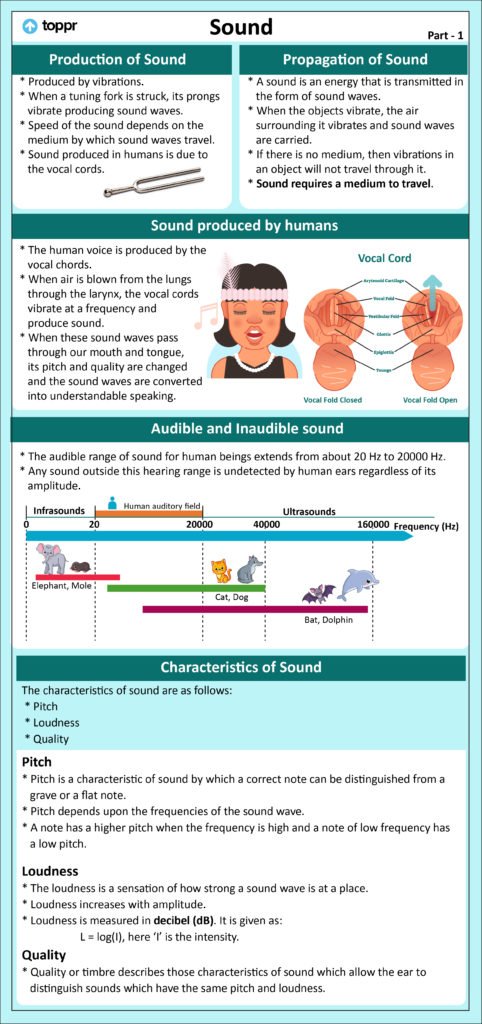
SOUND: Sound is a type of energy made by vibrations. When an object vibrates, it causes movement in surrounding air molecules. These molecules bump into the molecules close to them, causing them to vibrate as well. This makes them bump into more nearby air molecules.
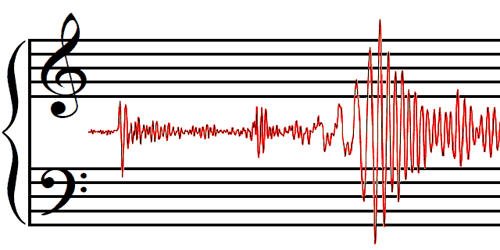
TYPES OF SOUND: 1. Musical/Regular/Organized/Definite. 2. Non Musical/Irregular/Unorganized/Indefinite
1. MUSICAL SOUND:
- vibrations that travel through the air or another medium and can be heard when they reach a person’s or animal’s ear.”light travels faster than sound”
- sound produced by continuous and regular vibrations, as opposed to noise.
- music, speech, and sound effects when recorded and used to accompany a film, video, or broadcast.”a sound studio”
- an idea or impression conveyed by words.”you’ve had a hard day, by the sound of it”synonyms: idea, thought, concept, impression, prospect, description
2. NON MUSICAL SOUND: A performance that is not musical. Noise. : Frequency is the measurement of the number of times that a repeated event occurs per unit of time. The frequency of wave-like patterns including sound, electromagnetic waves (such as radio or light), electrical signals, or other waves, expresses the number of cycles of the repetitive waveform per second.
FREQUENCY: Frequency is the measurement of the number of times that a repeated event occurs per unit of time. The frequency of wave-like patterns including sound, electromagnetic waves (such as radio or light), electrical signals, or other waves, expresses the number of cycles of the repetitive waveform per second.
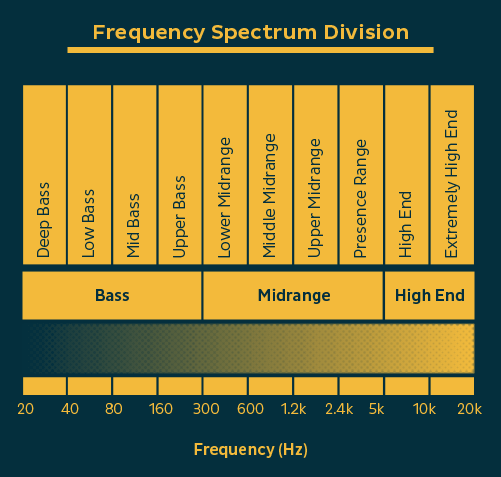
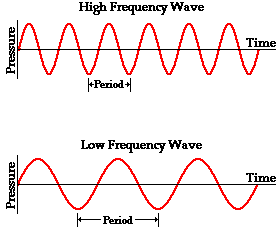
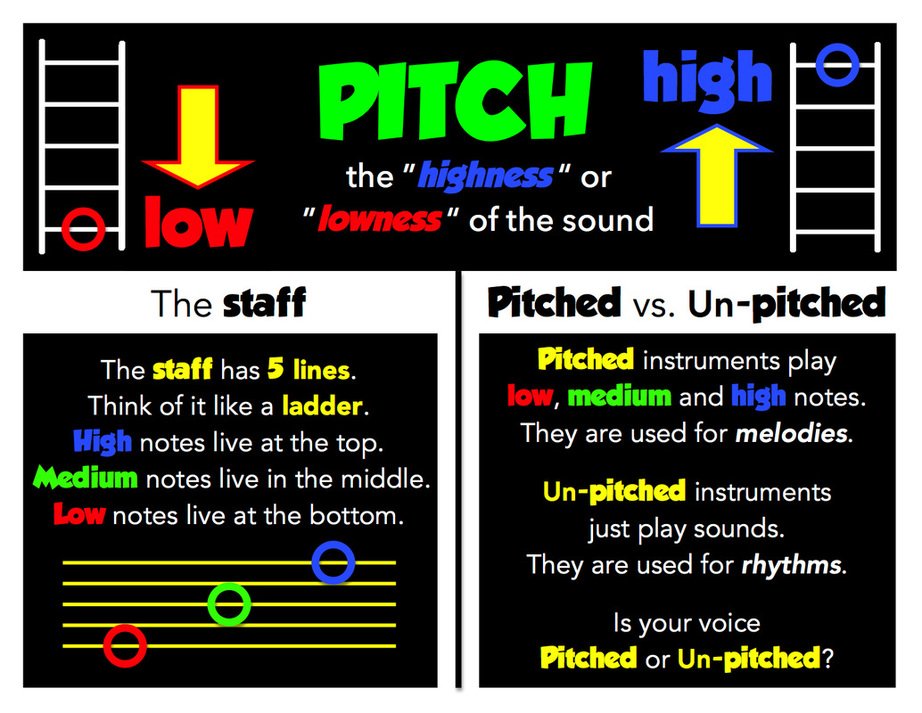
PITCH: 1. Highness or lowness of sound. 2. Amount of slope The roof has a steep pitch. 3. An up-and-down movement the pitch of a ship. 4. The throw of a baseball or softball to a batter. 5. The amount or level of something (as a feeling) Excitement reached a high pitch.
RESONANCE:

The word resonance comes from Latin and means to “resound” – to sound out together with a loud sound. Resonance is a common cause of sound production in musical instruments. One of our best models of resonance in a musical instrument is a resonance tube (a hollow cylindrical tube) partially filled with water and forced into vibration by a tuning fork. The tuning fork is the object that forced the air inside of the resonance tube into resonance. As the tines of the tuning fork vibrate at their own natural frequency, they created sound waves that impinge upon the opening of the resonance tube. These impinging sound waves produced by the tuning fork force air inside of the resonance tube to vibrate at the same frequency. Yet, in the absence of resonance, the sound of these vibrations is not loud enough to discern. Resonance only occurs when the first object is vibrating at the natural frequency of the second object. So if the frequency at which the tuning fork vibrates is not identical to one of the natural frequencies of the air column inside the resonance tube, resonance will not occur and the two objects will not sound out together with a loud sound. But the location of the water level can be altered by raising and lowering a reservoir of water, thus decreasing or increasing the length of the air column. As we have learned earlier, an increase in the length of a vibrational system (here, the air in the tube) increases the wavelength and decreases the natural frequency of that system. Conversely, a decrease in the length of a vibrational system decreases the wavelength and increases the natural frequency. So by raising and lowering the water level, the natural frequency of the air in the tube could be matched to the frequency at which the tuning fork vibrates. When the match is achieved, the tuning fork forces the air column inside of the resonance tube to vibrate at its own natural frequency and resonance is achieved. The result of resonance is always a big vibration – that is, a loud sound.
Another common physics demonstration that serves as an excellent model of resonance is the famous “singing rod” demonstration. A long hollow aluminum rod is held at its center. Being a trained musician, teacher reaches in a rosin bag to prepare for the event. Then with great enthusiasm, he/she slowly slides her hand across the length of the aluminum rod, causing it to sound out with a loud sound. This is an example of resonance. As the hand slides across the surface of the aluminum rod, slip-stick friction between the hand and the rod produces vibrations of the aluminum. The vibrations of the aluminum force the air column inside of the rod to vibrate at its natural frequency. The match between the vibrations of the air column and one of the natural frequencies of the singing rod causes resonance. The result of resonance is always a big vibration – that is, a loud sound.
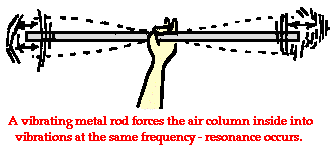
Another common physics demonstration that serves as an excellent model of resonance is the famous “singing rod” demonstration. A long hollow aluminum rod is held at its center. Being a trained musician, teacher reaches in a rosin bag to prepare for the event. Then with great enthusiasm, he/she slowly slides her hand across the length of the aluminum rod, causing it to sound out with a loud sound. This is an example of resonance. As the hand slides across the surface of the aluminum rod, slip-stick friction between the hand and the rod produces vibrations of the aluminum. The vibrations of the aluminum force the air column inside of the rod to vibrate at its natural frequency. The match between the vibrations of the air column and one of the natural frequencies of the singing rod causes resonance. The result of resonance is always a big vibration – that is, a loud sound.
Resonance and Musical Instruments
Musical instruments produce their selected sounds in the same manner. Brass instruments typically consist of a mouthpiece attached to a long tube filled with air. The tube is often curled in order to reduce the size of the instrument. The metal tube merely serves as a container for a column of air. It is the vibrations of this column that produces the sounds that we hear. The length of the vibrating air column inside the tube can be adjusted either by sliding the tube to increase and decrease its length or by opening and closing holes located along the tube in order to control where the air enters and exits the tube. Brass instruments involve the blowing of air into a mouthpiece. The vibrations of the lips against the mouthpiece produce a range of frequencies. One of the frequencies in the range of frequencies matches one of the natural frequencies of the air column inside of the brass instrument. This forces the air inside of the column into resonance vibrations. The result of resonance is always a big vibration – that is, a loud sound.

Woodwind instruments operate in a similar manner. Only, the source of vibrations is not the lips of the musician against a mouthpiece, but rather the vibration of a reed or wooden strip. The operation of a woodwind instrument is often modeled in a Physics class using a plastic straw. The ends of the straw are cut with a scissors, forming a tapered reed. When air is blown through the reed, the reed vibrates producing turbulence with a range of vibrational frequencies. When the frequency of vibration of the reed matches the frequency of vibration of the air column in the straw, resonance occurs. And once more, the result of resonance is a big vibration – the reed and air column sound out together to produce a loud sound. As if this weren’t silly enough, the length of the straw is typically shortened by cutting small pieces off its opposite end. As the straw (and the air column that it contained) is shortened, the wavelength decreases and the frequency was increases. Higher and higher pitches are observed as the straw is shortened. Woodwind instruments produce their sounds in a manner similar to the straw demonstration. A vibrating reed forces an air column to vibrate at one of its natural frequencies. Only for wind instruments, the length of the air column is controlled by opening and closing holes within the metal tube (since the tubes are a little difficult to cut and a too expensive to replace every time they are cut).
Resonance is the cause of sound production in musical instruments.
VIBRATION: Any rapid, repeating undulatory or tremulous movement; it is vibration that causes all sound.<br><br>A force which oscillates about some specified reference point. Vibration is commonly expressed in terms of frequency such as cycles per second (cps), Hertz (Hz), cycles per Minute (cpm) or (rpm) and Strokes per Minute (spm). This is the number of oscillations which occurs in that time period. The amplitude is the magnitude or distance of travel of the force.<br><br>The rapid back-and-fourth movement, often invisible, in space of an object against which some force has been applied.
ECHO: Echoes are sounds that are delayed far enough in time so that you hear each as a distinct copy of the original sound. When reverb or chorus might muddy the mix, both delays and echoes are a great way to add ambience to a track.
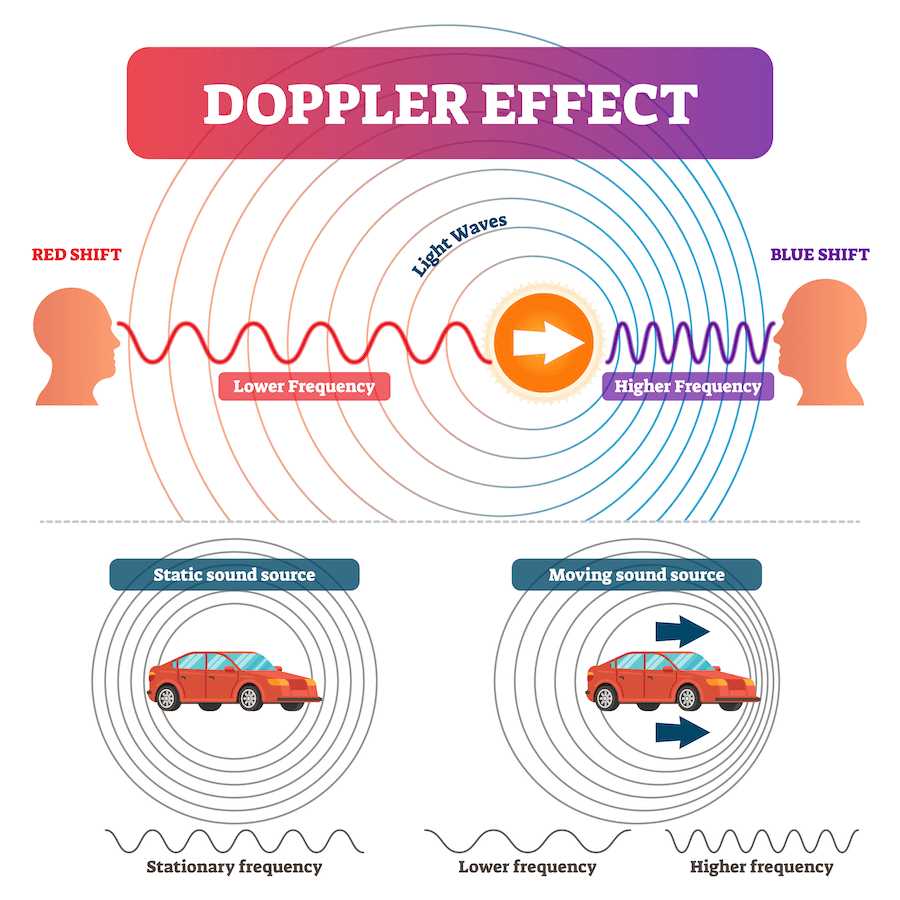
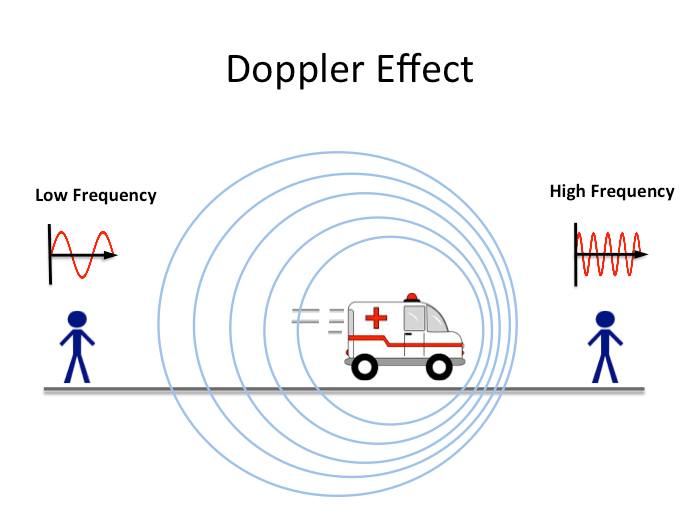
DOPPLER EFFECT: Doppler Effect works on both light and sound objects. For instance, when a sound object moves towards you, the frequency of the sound waves increases, leading to a higher pitch. Conversely, if it moves away from you, the frequency of the sound waves decreases and the pitch comes down.
 Shine For Christ